
Maria Consiglia Rasulo
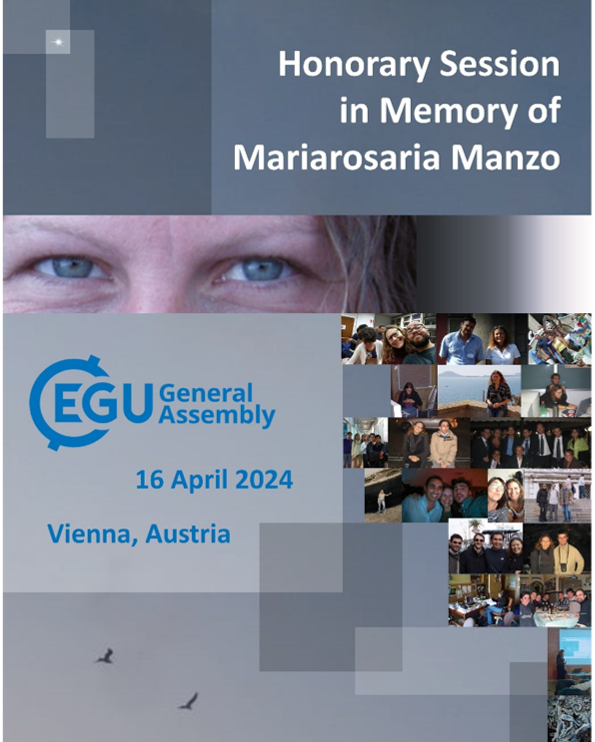 On Tuesday 16 April, as part of the EGU General Assembly 2024, an Honor Session will be held in memory of our colleague Mariarosaria Manzo, who passed away prematurely in 2022.
The proposed session is inspired by the themes that have characterized the 20-year research activity of Mariarosaria Manzo, which mainly focused on the exploitation of Synthetic Aperture Radar (SAR) data for the Earth surface deformation retrieval and investigation through the application of the original Differential SAR Interferometry (DInSAR) technique and the development of advanced DInSAR methods focused on generation of deformation time series, as for the Small BAseline Subset (SBAS) approach.
The session wants to remember the legacy that Mariarosaria left. Intelligence, competence, passion, courage, poise, firmness, gentleness, determination and sweetness have left an indelible mark on the people with whom she collaborated.
Download the brochure
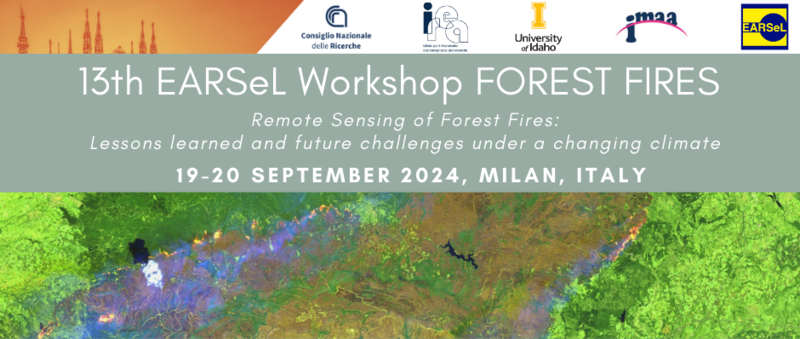 On 19-20 September 2024 it will be held in Milan the 13th EARSeL Forest Fire Workshop entitled “Remote Sensing of Forest Fires: Lessons learned and future challenges under a changing climate”.
The workshop has a long history and since the foundation of the Forest Fire Special Interest Group it gathers together scientists, experts, managers, local and international organizations involved in the use of Remote Sensing technologies for monitoring forest fires and their impacts on the biosphere in the framework of the climate crisis and expected climate changes.
The workshop is organized over two days with plenary oral and poster sessions. Abstracts will undergo revision by the scientific committee and accepted contributions from participants to the workshop will be published in a digital book of abstracts.
Abstract submission is open March 31, 2024 at this link
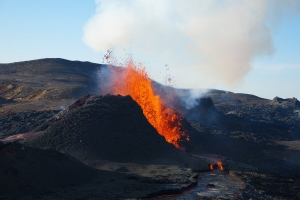
 An international team of researchers from the Institute for Electromagnetic Sensing of the Environment (CNR-IREA) in Naples and the Instituto Volcanológico de Canarias (INVOLCAN) in Tenerife (Spain) recently published an innovative study on the largest historical eruption ever recorded in La Palma, one of the Canary Islands, which occurred on September 19, 2021. The Tajogaite eruption aroused interest not only for its immediate impacts, but also for the significant amount of information obtained useful for scientific purposes.
The study, published in the prestigious journal Scientific Report, examined in detail the previous eight days and the first ten days of the eruption, revealing unknown elements of the dynamics and evolution of the island's volcanism.
“The prelude to the eruption lasted 8 days and was characterized by precursory signals that manifested themselves starting from 11 September 2021,” explains Luca D'Auria, Geophysicist and Director of the INVOLCAN Volcanic Surveillance Area. “The seismicity, with migration towards the west and towards the surface of the hypocentres”, continues D’Auria, “anticipated the onset of the imminent eruptive event”.
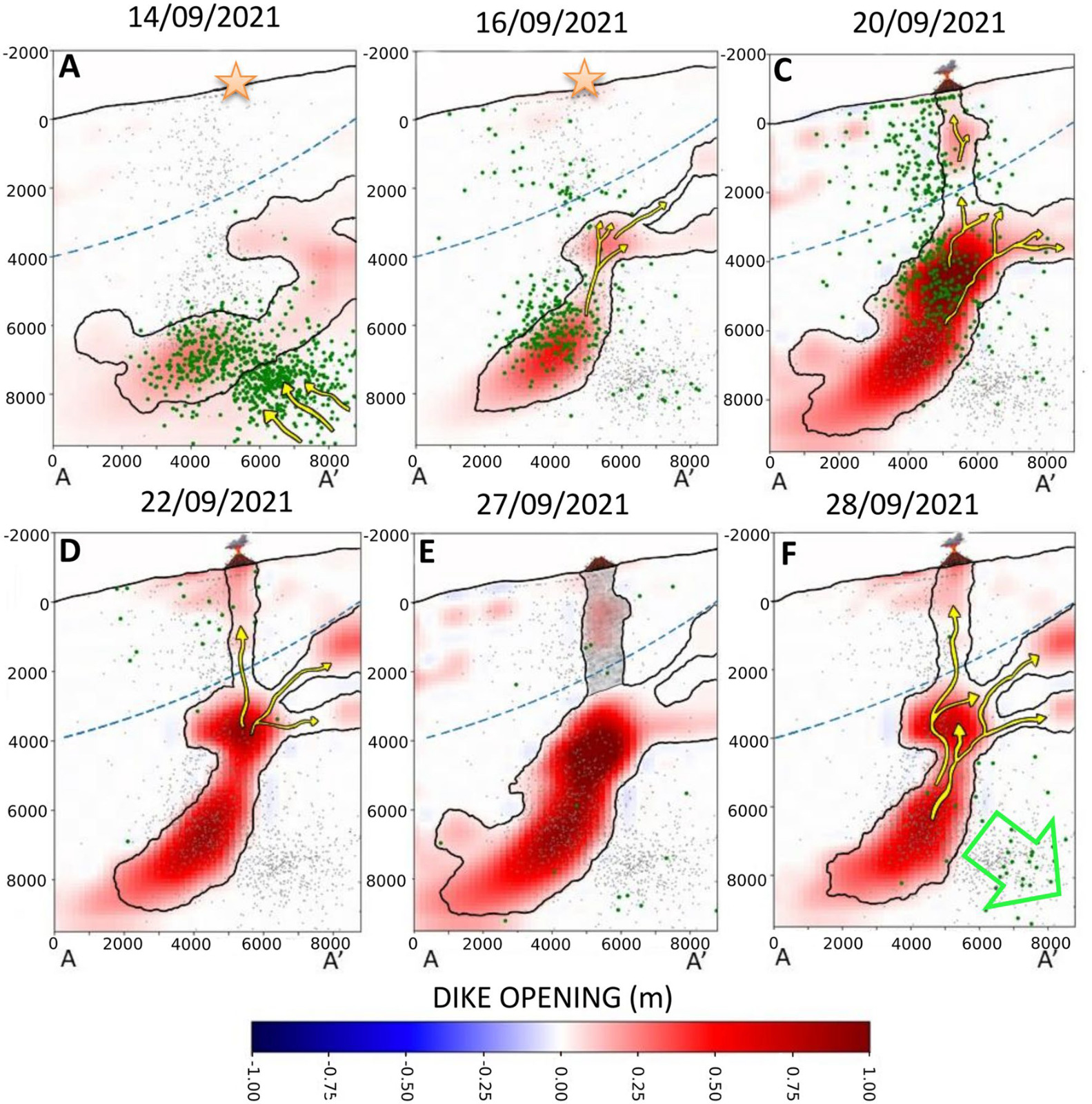
The permanent GPS-GNSS stations, active on the island western side, have also recorded, starting from 12 September, ground deformations of more than 15 cm, offering significant indications of the evolution of the underlying magmatic pressure. After the start of the eruption, ground deformations then reached their maximum peak on September 22nd, showing a tendency towards deflation in the following months. In particular, the observations showed that, on September 27th, the eruption suffered a pause of a few hours attributed to a temporary collapse of the surface feeding system along the active fracturing system.
To fully understand the volcano dynamics, the research team used GPS-GNSS time series and satellite data from the European Sentinel-1 constellation, examining ascending and descending orbits. The resulting source geometry revealed a dyke, which is a sub-vertical, spatially articulated intrusive magmatic structure, bent towards the east. Specifically, the aforementioned power system conditioned the rise of magma along two main branches showing a close correlation with pre-eruptive seismicity, and was also influenced by the presence of a ductile and thermally anomalous layer beneath the volcano. In-depth analyzes also revealed early surface deformations attributed to the effects of ascending hydrothermal fluids.
These results underline the importance of advanced modeling for understanding pre-eruptive processes in complex basaltic volcanoes. “The geodetic analysis carried out” states the geophysicist Pietro Tizzani, senior researcher of CNR-IREA, “has demonstrated the great potential of this technique in the study of magma ascent processes”.
The researchers involved in the study concluded that these findings provide evidence of the complexity of fracturing propagation processes and temporal changes in a volcano's surface fuel system, opening new perspectives for understanding and mitigating risks related to future eruptions.
In the figure: Schematic model of the dynamics of the magmatic supply system (Volcano Plumbing System). The orange stars represent the position of the volcanic vent compared to the days preceding the eruption. The volcano symbols, instead, represent the actual position of the current volcanic vent. The yellow arrows represent the directions of magma rise, while the green arrow indicates the incipient collapse of the magma reservoir. The blue dashed lines represent the rheological boundary limit of the system under consideration.
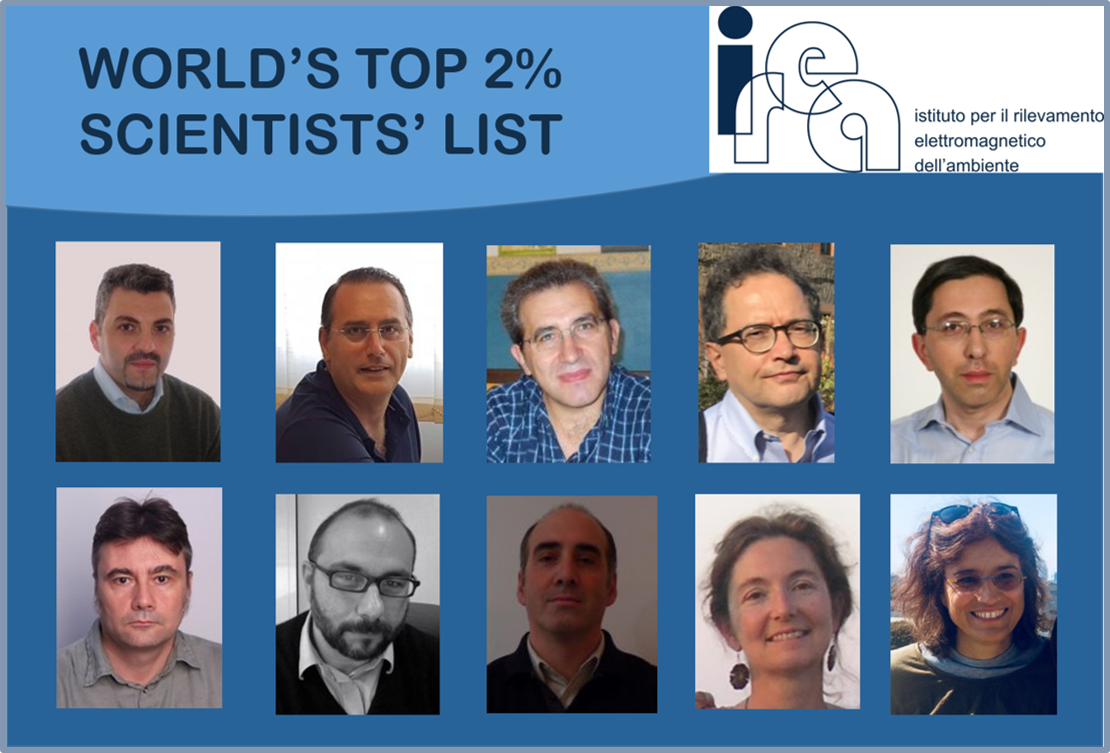 With 10 researchers, CNR-IREA (Institute for Electromagnetic Sensing of the Environment) renewed its presence in the world ranking of the best international scientists drawn up by researchers at Stanford University and published in the prestigious scientific journal PLOS Biology.
The list of the world's “Top Scientists” contains 210,199 names of scientists who fall into the top 2% in their specific research areas. The evaluation is based on the statistical analysis of the quantity, quality and diffusion of scientific publications by over 6 million researchers from universities and research centers around the world grouped in 22 scientific fields and 174 subfields.
In the list of those who have distinguished themselves for the scientific impact of their research, considered throughout their careers until December 2022, there are Gianfranco Fornaro, Riccardo Lanari, Eugenio Sansosti, Francesco Mattia and Antonio Pepe (Geological & Geomatics Engineering area), Francesco Soldovieri and Lorenzo Crocco, (Networking & Telecommunications), Romeo Bernini (Optoelectronics & Photonics), Gloria Bordogna, (Artificial Intelligence & Image Processing). To these is added Claudia Giardino (Geological & Geomatics Engineering), who is present in the "single year 2022" list that considers the scientific productivity of 2022.
The important recognition rewards the constant commitment of IREA researchers and confirms the high quality of the Institute's scientific research.
On 8 September 2023 (22:11:00 UTC), a 6.8 magnitude earthquake struck southern Morocco, causing widespread damage and thousands of fatalities. Thanks to an automated processing system developed in the framework of the Satellite data thematic core service (TCS-SATD) of the EPOS-Research Infrastructure (EPOS-RI) [1], it is now possible to shed new light on dramatic phenomena such as this one, providing valuable scientific insight to both scientists and hazards prevention activities. Developed by a team of researchers at CNR-IREA and INGV, the system is triggered by an earthquake occurrence and allows to investigate the surface deformation field induced by the considered seismic events, as well as to characterize the earthquake seismic source.
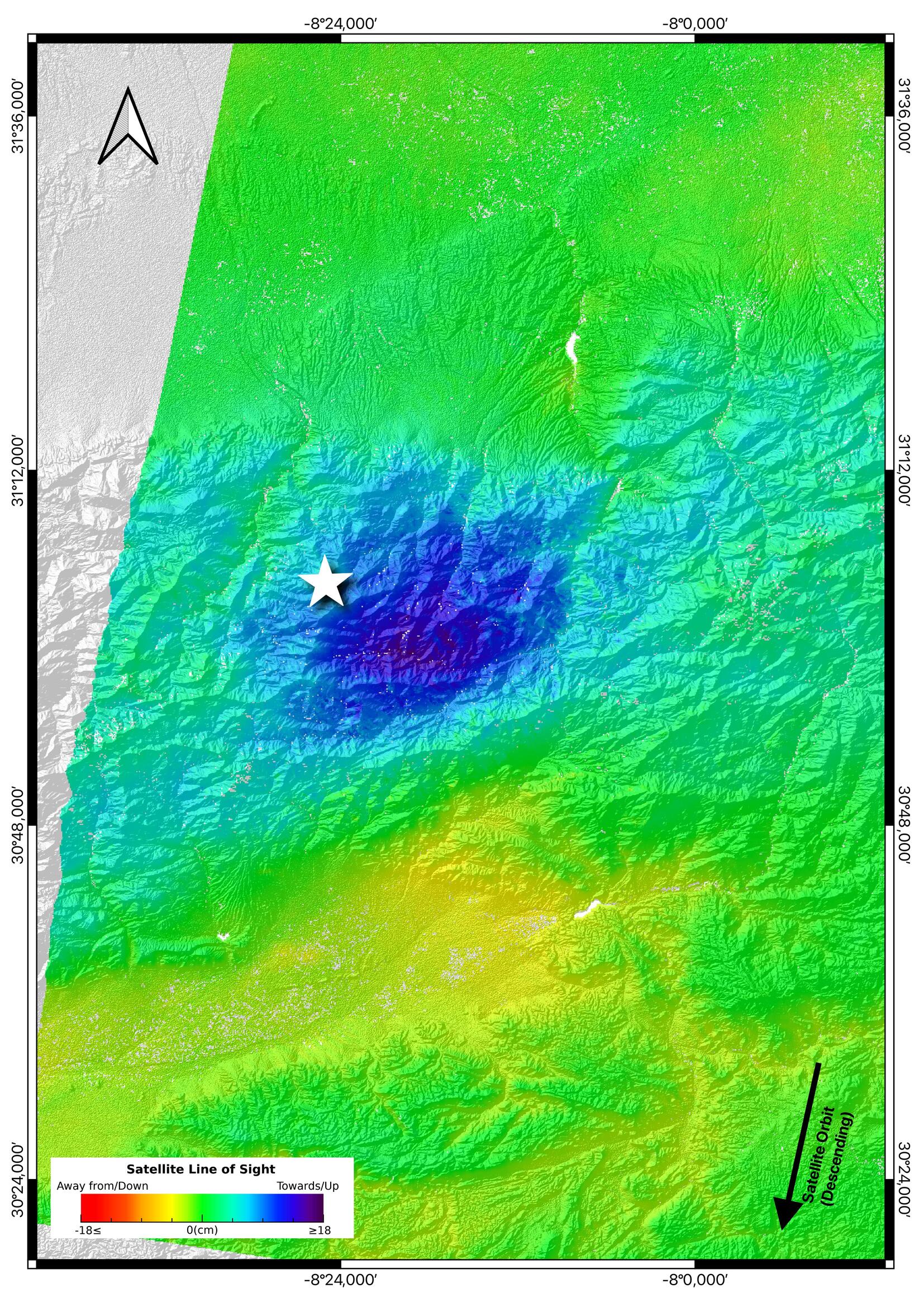 Figure 1. Line-of-sight (LOS) displacement map computed from the Sentinel-1 18082023-11092023 descending data pair (Track 154). The white star indicates the location of the Mw 6.8 epicenter occurred on 8 September 2023 Figure 1. Line-of-sight (LOS) displacement map computed from the Sentinel-1 18082023-11092023 descending data pair (Track 154). The white star indicates the location of the Mw 6.8 epicenter occurred on 8 September 2023 |
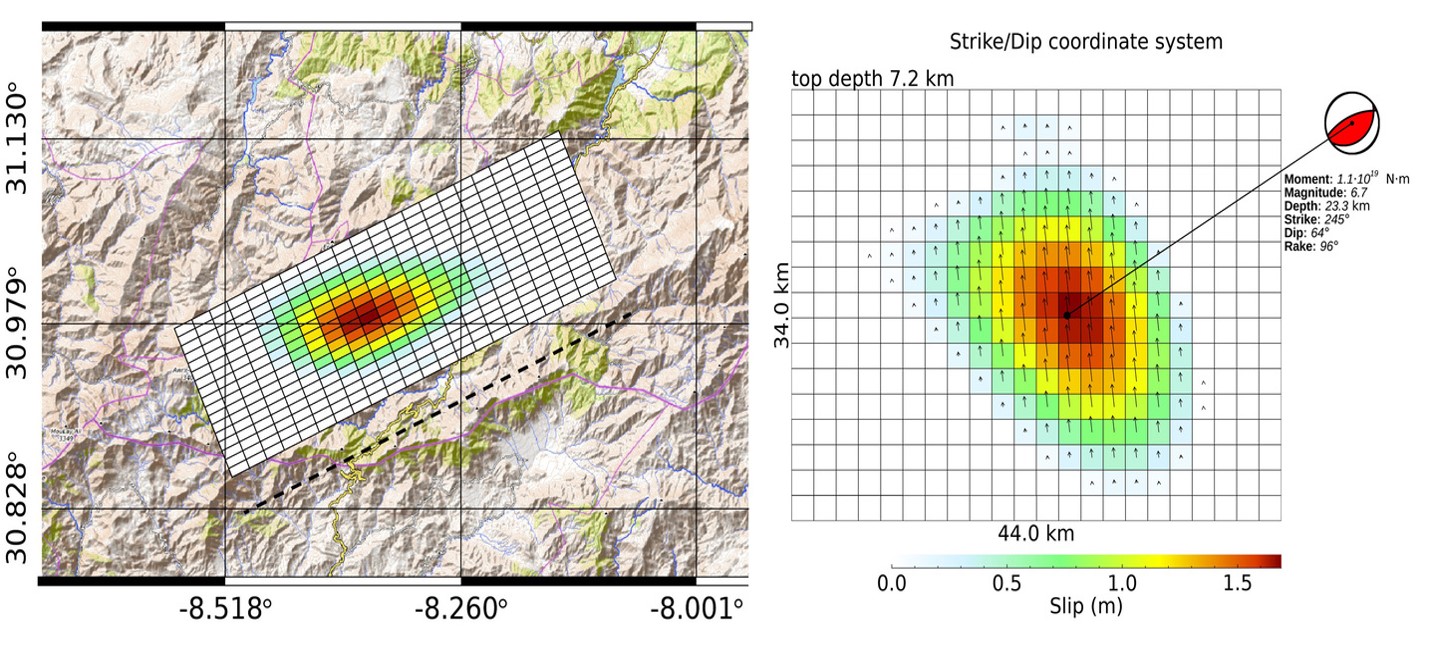
By applying the Synthetic Aperture Radar Interferometry (InSAR) technique to data acquired by the European Sentinel-1A satellite across the event, the system automatically generates a map of the surface displacement induced by the earthquake [2]. The map, presented in Figure 1, shows that the ground experienced a maximum displacement of about 18 cm along the satellite Line-of-Sight (LOS) and a minimum of about -5 cm. This research product is immediately shared with the scientific community through the EPOS Data Portal [3] for further analysis, while being further processed by the system to retrieve also information about the seismic source that originates the earthquake, that resulted to be a North dipping fault with an inverse mechanism and a maximum slip of about 1.7 m, as shown in Figure 2. Seismic source products are presently available at this link [4] and are going to be soon integrated within the TCS-SATD data product portfolio.
The implementation of the described system is the subject of a recent publication [5] carried out through the joint efforts of CNR-IREA and INGV researchers.
|
Figure 2: Slip distribution from geodetic data |
1. EPOS website: https://www.epos-eu.org
2. Monterroso et al. (2020). A Global Archive of Coseismic DInSAR Products Obtained Through Unsupervised Sentinel-1 Data Processing. Remote Sens., vol. 12, no. 3189, pp. 1–21. https://doi.org/10.3390/rs12193189
3. EPOS Data Portal: https://www.epos-eu.org/dataportal
4. http://terremoti.ingv.it/en/finitesource_summary/36092321#SorgenteEstesa
5. Atzori et al. (2023). Automatic seismic source modeling of InSAR displacements. International Journal of Applied Earth Observation and Geoinformation, Volume 123. https://doi.org/10.1016/j.jag.2023.103445
HERITAGE journal, founded in 2018 by Nicola Masini (Cnr-Ispc) and Francesco Soldovieri (Cnr-Irea), who are also its Editors in Chief, received its first Impact Factor of 1.7 in the Journal Citation Reports (Clarivate) last June.
HERITAGE is a monthly Open Access journal, indexed in Scopus, ESCI (Web of Science), and other databases. HERITAGE is dedicated to the issues of knowledge, conservation, management and protection of cultural and natural heritage, with a holistic approach ranging from technologies, best practices and social sciences.
The journal was founded with the idea of encouraging synergistic connections between different disciplines, technologies, themes, application scenarios, approaches (from multidisciplinary to trans-disciplinary), enhancing the areas of cultural and natural heritage, which increasingly represent a frontier area for new methodological and technological advances of interest also in other sectors of knowledge.
For more information about the magazine, go to this link.
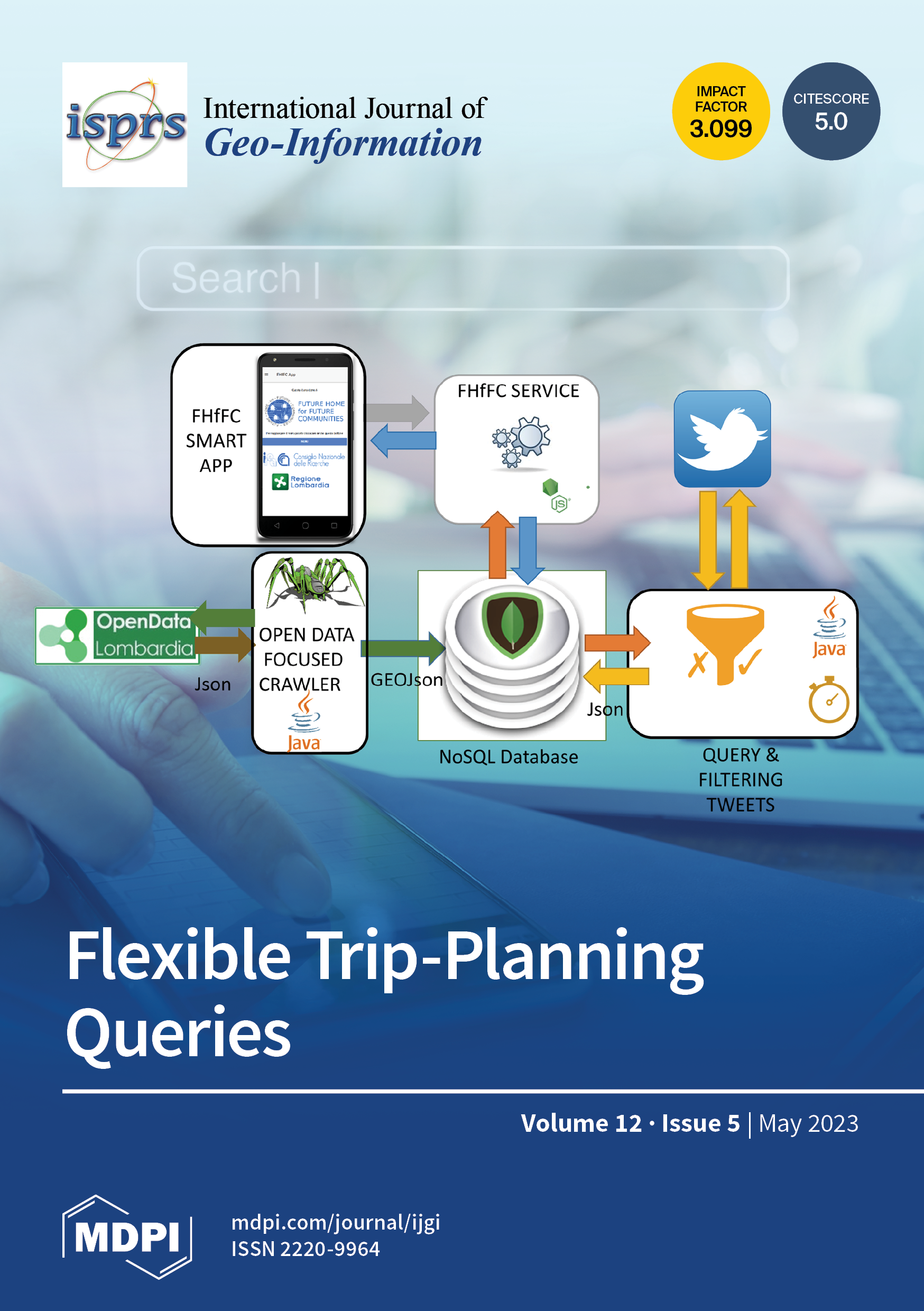
The article “Flexible Trip-Planning Queries”, by Gloria Bordogna, Paola Carrara, Luca Frigerio and Simone Lella of CNR-IREA, has been selected by the ISPRS International Journal of Geo-Information (IJGI) as the cover story of Volume 12 (Issue 5, May 2023), which contains 29 articles devoted mostly to themes and problems of geographic information systems.
In the context of high social mobility, in which people frequently change their place of life, for both work and tourism, and services present in an area (such as shops) change rapidly, there is a growing need for systems that allow users to be quickly and constantly aware of local resources. In such a context, the current practice of searching on the Internet for different types of geo-resources in a geographic area, to identify the most convenient routes for visiting the most relevant ones, is inadequate since it requires the iterative formulation of several queries.
To perform this task within a Geographic Information Retrieval (GIR) system, the article proposes “flexible trip planning queries”, which allow users to formulate a single query to identify the most relevant resources of the types of interest and to rank alternative routes to visit them by taking into account users’ preferences and visit priorities.
The algorithm is applied in the Smart cOmmunity-based Geographic infoRmation rEtrievAl SysTem (SO-GREAT) system, developed in IREA to empower local communities: in fact, it collects and manages open data made available by both regional and local authorities in the Lombardy region that describe local resources and services (such as schools, hospitals, etc.) and voluntary geographic services in which citizens offer services in the neighbourhood.

IElectric, magnetic, and electromagnetic fields (EMF) are widely used in everyday life and in specific occupational environments. EMF-based technologies employ different parts of the spectrum, from static fields to low and high frequency electromagnetic fields encompassing millimeter waves and THz.
Exposure to these fields raises concerns about the possible effects on human health, especially due to the diffusion of 5G networks, which are expected to have a major impact on exposure scenarios. On the other hand, biomedical applications of non-ionizing radiations are successfully employed for diagnosis and therapy (e.g., electroporation-based treatments, microwave hyperthermia, etc.). There is great interest in evaluating the associated interaction mechanisms, which are also relevant to foster the development of new biomedical applications or the optimization of the existing ones.
The Special Issue "Electric, Magnetic, and Electromagnetic Fields in Biology and Medicine: From Mechanisms to Biomedical Applications, Volume II" of the journal Bioengineering, whose guest editors are Stefania Romeo and Anna Sannino of CNR-IREA, is open to scientific studies addressing in vitro, in vivo, and epidemiological investigations on electric, magnetic, and electromagnetic exposure aimed at evaluating possible health effects, the beneficial potential of such fields for diagnosis and therapy, and studies focusing on interaction mechanisms.
More information is available at this link